The Aesteria Codex //003: Your Personal Brand Isn’t About You (And Why That’s the Key to Building a Magnetic Brand)
If you’re here to build something iconic, you’re in the right place. Subscribe by clicking here for weekly insights on brand building, psychology, and influence.
Listen to me very closely while I tell you a truth that will radically shift how much money you make once you understand this.
Your personal brand is not about you.
Which I know, sounds a little strange, considering the whole idea of a personal brand should well.. of course be, “personal.” But actually, it’s not.
One of the biggest mistakes I see entrepreneurs make is building their brand around their personality, their interests, or whatever they feel like expressing that week.
This is actually something I see happen most often when someone is trying to “refine” their brand without a clear identity guiding those decisions, which I shared more about in last week’s article → Why I Kept Changing My Brand [AC 002]
And ironically, that’s the exact reason their brand never makes real money.
Because a magnetic personal brand isn’t built around self-expression.
It’s built around identity.
Around what you represent.
And when you build your brand around yourself instead of what you represent, the symptoms start showing up everywhere in your business:
❌ You’re constantly changing your offers because nothing ever quite feels like “the one.”
❌ Some things sell incredibly well, while others fall completely flat, and you can’t figure out why.
❌ Your messaging shifts every few months, your visuals change, your positioning never “makes sense”, and you find yourself copying pieces of your mentors’ content styles just trying to figure out how you’re supposed to communicate your ideas.
Until eventually your business starts to feel like a bunch of moving pieces all pulling in different directions.
Why Your Personal Brand Still Feels Small (Even Though You Know You’re Capable of So Much More)
One of the most frustrating experiences as an entrepreneur is knowing you’re capable of so more than what your brand currently reflects.
You know you’ve got genius ideas.
You know you’re damn good at what you do.
But yet, you’re not making the type of money you want, and your views and reach are a fraction of what you see the big name brands of your niche bringing in.
Over the years I’ve studied hundreds of personal brands in this industry.
And when a brand isn’t capturing attention or generating the kind of money it should be, it’s because it was built on the wrong foundation.
Three Mistakes That Keep Personal Brands Small (And keep you from becoming the recognized, high-income brand you know you’re capable of building)
These mistakes show up again and again when entrepreneurs build their personal brand.
And the tricky part is, most people don’t even realize they’re making them because the industry rarely teaches you how to actually build a personal brand in the first place.
Most of the advice out there focuses on how to create content, not how to build a brand identity. So let’s fill in the gaps you’re missing, and talk about the mistakes that are keeping your personal brand small.
1. The Personality Trap
Building your brand around your personality instead of a clear identity.
This looks like creating content based on whatever you feel inspired to talk about that week.
This is also where a lot of entrepreneurs unknowingly start building their business around their mood instead of a stable identity, which leads to constant shifts in direction → Check out my own story about: Why I Stopped Calling Myself a Psychic Business Advisor
So your messaging, topics, and positioning shift day-to-day along with it.
The problem with this is that your audience never develops a clear association with you.
They don’t see you as an expert in anything specific, and they don’t have a clear point to connect back to when they encounter your brand.
Which makes you easily forgettable because human memory works through association and repetition. When your brand isn’t consistently tied to a clear identity, your audience has nothing to remember you for.
2. The Personal Aesthetic Illusion
Designing your brand around what you personally like instead of building a visual identity that creates recognition.
This looks like choosing colors, fonts, and visuals based on whatever aesthetic you think looks pretty, trendy, or inspiring in the moment.
So every new offer, project, or phase of your business ends up with a slightly different visual direction.
The problem with this is that your personal taste will naturally evolve over time. And when your brand is built around whatever you currently like, it means your visuals end up changing every time your taste does.
Strong brands don’t work like that.
They have a stable visual foundation that stays recognizable, even as the expression evolves.
Think about brands like Chanel.
They may introduce different colors, collections, or seasonal visuals, but the core identity of the brand is always recognizable.
Without that kind of foundation, your visuals end up drifting with trends, and your audience starts to see you like every other personal brand trying to make it, instead of someone unique worth paying attention to.
3. The Expertise Overload
Trying to build your brand around everything you’re capable of doing.
This looks like promoting every service you offer, every skill you have, and every topic you know how to teach. Your brand ends up talking about ten different things instead of becoming known for one clear idea.
The problem with this is your audience doesn’t know how to categorize you. They will recognize that you’re talented or knowledgeable, but they can’t quickly identify what you’re the person for.
And this is exactly where positioning starts to break down, because if your audience can’t clearly understand what you’re known for, they can’t confidently choose you. Learn how to craft a Unique Selling Proposition that makes your audience fall in love → How to Define Your USP
And when the human mind can’t easily categorize something, it struggles to remember it.
Strong personal brands create a clear mental shortcut.
When someone hears your name, they immediately associate you with a specific perspective, idea, or experience.
What Actually Makes a Personal Brand Magnetic
When I finally started studying why certain personal brands grow so quickly while others struggle to gain traction, a clear pattern started to appear.
Magnetic brands are built around a few key structural elements that create consistency, recognition, and emotional resonance.
Over time, I started to see these elements as four core pillars.
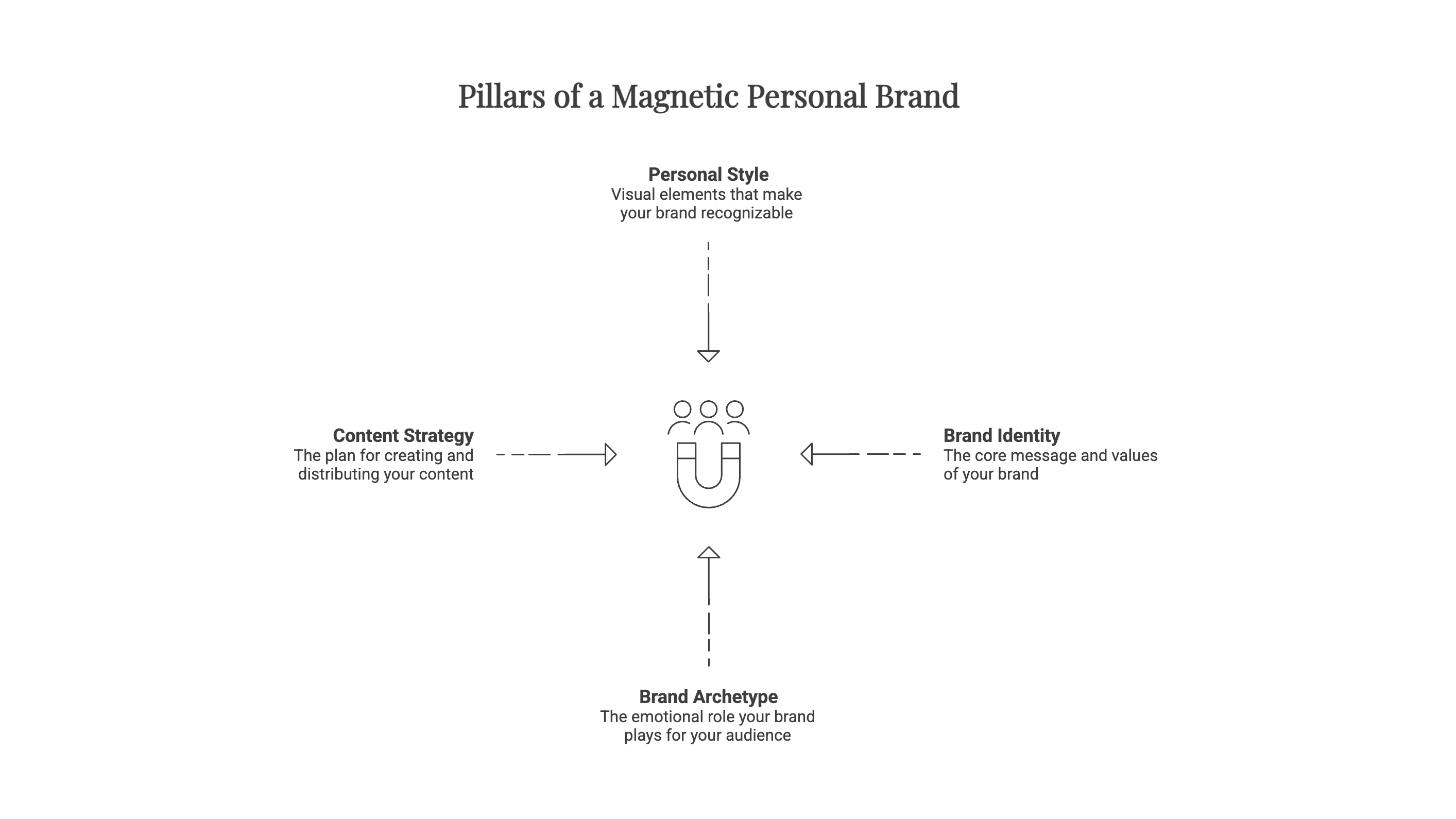
The Four Pillars of a Magnetic Personal Brand
1. Personal Style & Color
The visual harmony of your brand. Your color palette, imagery, and visual identity should feel cohesive and recognizable. When someone sees your content, they should immediately associate that aesthetic with you.
2. Brand Identity
This is the intellectual foundation of your brand. Your message. Your philosophy. What you stand for. It’s the lens through which your audience understands the value you bring.
3. Brand Archetype
Your archetype represents the emotional role your brand plays in the lives of your audience. This archetypal energy shapes how people experience your content and connect with your message.
4. Content Strategy
Your content is how the other three pillars come to life. The format, structure, and rhythm of your content should reinforce your brand identity and archetype, rather than contradict them. When these elements work together, your brand starts to feel cohesive and recognizable.
A Quick Invitation Before We Wrap Up
Over the next few weeks inside The Aesteria Codex, we’ll be diving much deeper into what actually creates a magnetic personal brand.
But I’d also love to hear what you want help with.
If you have a question about your brand: whether it’s messaging, positioning, content, or brand identity, you can submit it through my Ask Irisel form.
Each week I’ll select a few questions and answer them directly inside the Codex.
Submit your question here: [Ask Irisel]
Next week I’ll be answering some of your questions directly, so if there’s something you’ve been stuck on while building your brand, now’s the perfect time to ask.

For founders ready to be seen at their full capacity. Subscribe to The Aesteria Codex by clicking here.